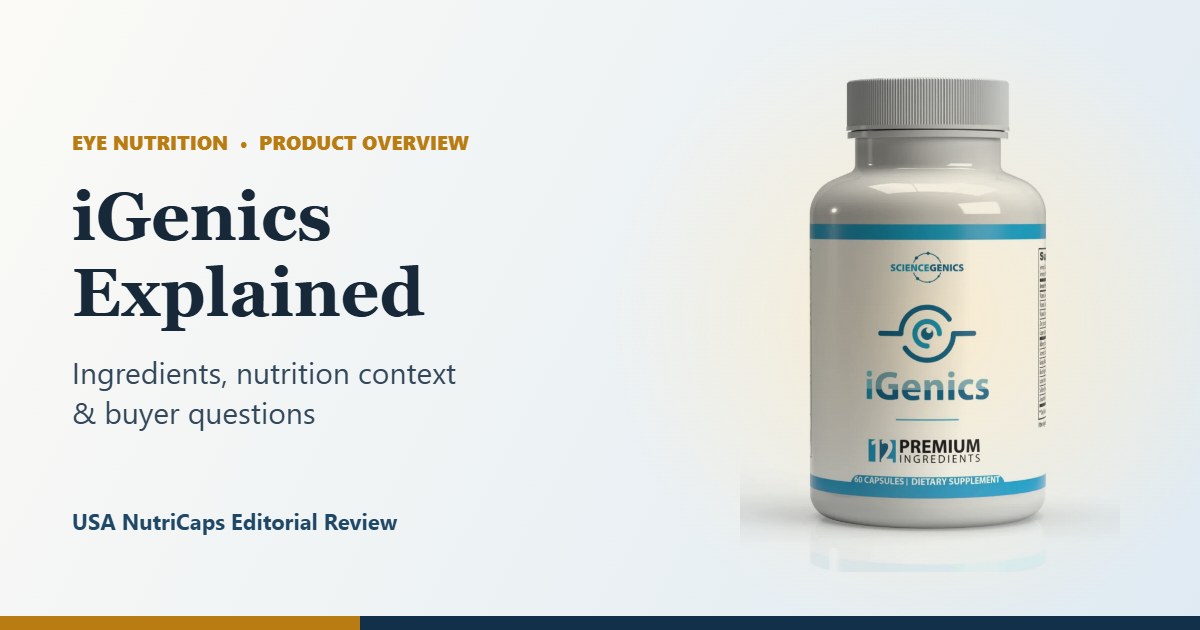
Reviews iGenics
Eye Nutrition • Independent Product Overview
iGenics Explained: Ingredients, Nutrition Context & Buyer Questions
Considering iGenics? Here’s a practical guide to what’s on its label, how it compares with a formula studied by the National Eye Institute, and how to separate nutrition research from product promises.
An independent USA NutriCaps editorial review based on product information, ingredient research, and published scientific evidence.
Advertising and affiliate disclosure: USA NutriCaps may earn a commission if you purchase through links on this page, at no additional cost to you. Our editorial content is written independently.
Explore iGenics on the Official Seller Site
Opens the seller’s official presentation; offer details are controlled by the seller.
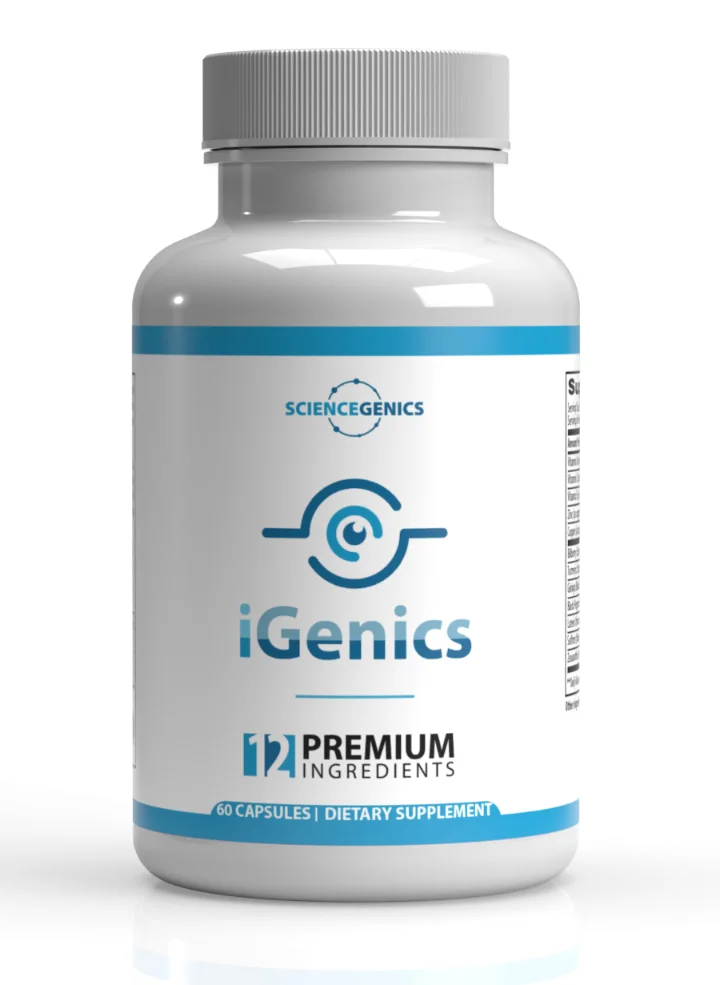
Last updated: October 20, 2026. This page is an advertisement: USA NutriCaps may be compensated for sales of iGenics made through links on this page. The views here are USA NutriCaps’ own and do not represent the views of Science Genics. For current product details, see the official iGenics presentation linked on this page.
What Is iGenics?
iGenics is a dietary supplement sold by Science Genics for everyday eye nutrition. Its marketing focuses on vitamins, minerals and plant-derived nutrients commonly discussed in the vision-supplement category—a combination that may interest shoppers who want to understand an eye-nutrition label before adding something to their routine.
The most useful starting point is not a dramatic promise. It is a straightforward question: what is in the product you would actually receive, and how does it compare with what has been studied? This overview follows that approach.
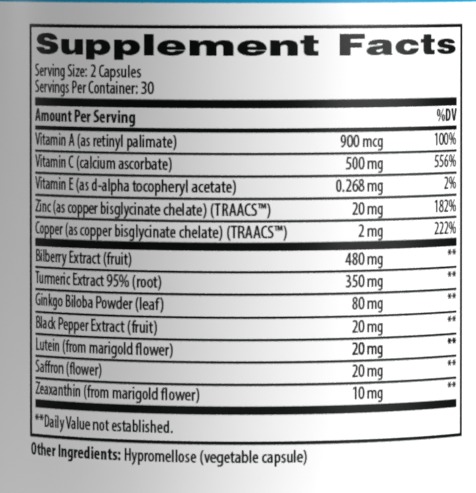
The label answers the first part. It lists twelve ingredients, each with an amount per two-capsule serving, rather than hiding them inside a proprietary blend. What the label can’t tell you is how the finished formula performs—so this overview keeps what the seller says separate from what independent research shows.
iGenics at a glance
Sold by Science Genics
Format Vegetable capsules; two capsules once a day, per the label directions
Per container 60 capsules (30 servings)
Listed ingredients Twelve, each with an amount per serving: five vitamins and minerals, two carotenoids and five botanical ingredients
Other ingredients Hypromellose (vegetable capsule)
Facts from the Supplement Facts panel in the seller’s official product image, checked against the seller’s current presentation (October 2026).
What Does the Seller Say Is in iGenics?
Science Genics highlights lutein and zeaxanthin alongside antioxidant vitamins and minerals such as vitamins C and E, zinc and copper, plus several plant-derived ingredients. The Supplement Facts panel in the seller’s product image lists these twelve ingredients per two-capsule serving:
Vitamins & minerals
Five nutrients with a Daily Value
Carotenoids
From marigold flower; no Daily Value established
Botanical ingredients
Plant extracts and powders; no Daily Value established
Bars compare amounts within the carotenoid and botanical groups only. Amounts as listed on the seller’s Supplement Facts panel; the current presentation states the same lutein, zeaxanthin, saffron and turmeric amounts.
Lutein and zeaxanthin — 20 mg and 10 mg
Both are carotenoids, and the label lists marigold flower as their source. They are the ingredients most closely tied to the nutrition research discussed below.
Vitamins and minerals
The label lists vitamin A as retinyl palmitate (900 mcg), vitamin C as calcium ascorbate (500 mg), vitamin E (0.268 mg, 2% of the Daily Value), and zinc and copper as chelated minerals. The panel’s wording describes the zinc as “copper bisglycinate chelate,” which appears to be a labeling slip; if the form of zinc matters to you, ask the seller to confirm it.
Botanical ingredients
Bilberry extract (480 mg) and turmeric extract (350 mg) are the largest ingredients by weight, followed by ginkgo biloba leaf powder (80 mg), saffron (20 mg) and black pepper extract (20 mg). These plant ingredients sit outside the formula studied by the National Eye Institute.
The label checklist that matters
Before buying, look at the current Supplement Facts panel. Check the serving size, individual amounts, the full ingredient list and other ingredients, relevant cautions, and anything that matters for your dietary needs. The label directions advise against use by pregnant or nursing women and people under 18, and suggest consulting a physician before use. If the current presentation does not answer an important question, ask the seller before purchasing.

Why Lutein and Zeaxanthin Get Attention
Lutein and zeaxanthin are carotenoids found naturally in foods such as leafy greens, corn and egg yolks. In the eye, they concentrate in the macula, where they form what researchers call macular pigment. That is why these two nutrients appear so often in eye-nutrition product descriptions.
Recognizing an ingredient is not the same as validating a finished supplement. Two products might list a familiar nutrient but use different amounts, combinations or preparations—and even strong research about one nutrient combination does not establish that iGenics produces the same outcomes.
How the Label Compares With the AREDS2 Formula
The National Eye Institute (NEI) tested a specific nutritional formula in a large clinical trial known as AREDS2. iGenics’ seller presentation says its vitamin and mineral amounts are based on that research, so it is worth putting the two side by side.
| Nutrient | AREDS2 formula | iGenics label |
|---|---|---|
| Vitamin C | 500 mg | 500 mg |
| Vitamin E | 400 IU | 0.268 mg |
| Zinc | 80 mg | 20 mg |
| Copper | 2 mg | 2 mg |
| Lutein | 10 mg | 20 mg |
| Zeaxanthin | 2 mg | 10 mg |
| Vitamin A | Not included | 900 mcg |
| Botanical ingredients | Not included | Five listed |
The overlap is partial. iGenics matches the AREDS2 amounts for vitamin C and copper, provides more lutein and zeaxanthin, provides a quarter of the zinc and far less vitamin E, and adds vitamin A and five botanical ingredients. That makes it a different formula—not the one the NEI tested—and this comparison says nothing about effects.
What Does Human Research Actually Tell Us?
The NEI’s AREDS and AREDS2 trials, plus a body of smaller studies, explain why lutein and zeaxanthin receive scientific attention. The critical distinction: these studies evaluated defined nutrient formulas in particular groups of people. None of them tested iGenics.
National Eye Institute · FAQ
What the AREDS2 formula contains
The NEI explains the nutrients and daily amounts in the AREDS and AREDS2 formulas, who took part in the trials, and the limits of what researchers found.
National Eye Institute · Trials
How the AREDS trials were designed
An overview of the two large NEI-sponsored clinical trials, the formulas they compared and the participants they enrolled.
Lutein + zeaxanthin · 2014 trial
One year, 115 healthy young adults
Adults took 10 mg lutein and 2 mg zeaxanthin daily or a placebo for one year. Macular pigment and blood levels rose, and photostress recovery and chromatic contrast improved; performance under glare did not change significantly.
Hammond et al., Investigative Ophthalmology & Visual Science, 2014
Lutein + zeaxanthin · 2015 trial
Visual processing speed in young adults
Sixty-nine healthy young adults were randomized to one of two lutein and zeaxanthin supplements or a placebo for four months. Macular pigment density and a measure of visual processing speed improved with supplementation and did not change with placebo.
Bovier & Hammond, Archives of Biochemistry and Biophysics, 2015
Antioxidants · 2024 meta-analysis
Consistent pigment gains, low-quality evidence
A network meta-analysis of 38 randomized trials found that all antioxidant supplement groups increased macular pigment optical density. The authors cautioned that the findings rest on low-quality evidence.
What does that mean for iGenics? Research can give you context for understanding an ingredient category. It cannot prove the finished product’s effectiveness, and the studied amounts differ from those on the iGenics label. If you are choosing a supplement because of a specific eye-health concern, your eye-care professional is the right person to discuss suitability and the evidence.
Nutrient Research Is Not Product Proof
Research on individual nutrients is useful background, but it answers a different question from the one most buyers have: is this specific product right for me?
What nutrient studies can tell you
- Whether a nutrient has been studied in people at all
- Which people were studied, and for how long
- Which amounts and combinations were used
- How consistent and how certain the findings are
What they can’t tell you about iGenics
- Whether this twelve-ingredient combination produces the same effects
- Whether its amounts, which differ from the AREDS2 formula, behave the same way
- How the botanical ingredients interact with the rest of the formula
- What results you personally can expect
We did not find a published clinical study of the finished iGenics formula in PubMed (searched October 2026). The accurate description is a product built from studied nutrients—not a clinically proven product.
Four Questions to Ask Before Choosing iGenics
Before you decide, work through four practical questions.
01
Can I see the current full label?
A clear ingredient description is helpful. The current Supplement Facts panel is more useful for checking exactly what you would take.
02
Does it fit my routine?
Check for overlap with other supplements and medications. More ingredients do not necessarily mean a better fit.
03
Am I comparing like with like?
Compare actual ingredients and amounts rather than slogans. A formula described as based on research is not the studied formula.
04
Are my expectations realistic?
A nutritional supplement is not a replacement for eye examinations, prescription lenses or professional guidance.
Who May Find This Overview Helpful?
This overview is intended for adults who are actively researching eye-nutrition supplements and want to understand the seller’s ingredient description before deciding. It may also help those who have encountered the term AREDS2 and want to know why the details of a nutritional formula matter.
If you already use supplements, have dietary restrictions, take medication or have a specific concern about your eyes, review the actual label with a qualified health professional. We cannot determine whether this particular formula is suitable for you.
Frequently Asked Questions
What is iGenics?
iGenics is a dietary supplement sold by Science Genics in the eye-nutrition category, taken as two vegetable capsules once a day.
What ingredients are in iGenics?
Its Supplement Facts panel lists vitamins A, C and E, zinc, copper, lutein, zeaxanthin, bilberry extract, turmeric extract, ginkgo biloba, saffron and black pepper extract, each with an amount per serving. Check the current panel for the authoritative list.
Is iGenics the same as the formula studied in AREDS2?
No. The label shares some nutrients with the AREDS2 formula but differs in several amounts—for example 20 mg of zinc versus 80 mg—and adds vitamin A and botanical ingredients. The research evaluated specific formulations, not iGenics as a finished product.
How was this overview prepared?
It is an independent USA NutriCaps editorial review based on product information, ingredient research and published scientific evidence. It does not describe hands-on use or product-specific clinical results.
Where can I review the current product offer?
The links on this page open the official seller presentation. The seller controls its current product details and purchase process.
The Bottom Line
iGenics is worth understanding on its own terms: an eye-nutrition supplement with a fully disclosed twelve-ingredient label that overlaps with—but does not match—the AREDS2 formula. Its ingredient story may be relevant to your shopping decision, but the strongest next step is checking the actual product information rather than assuming a specific result.
If you’re ready to examine the seller’s current presentation, use the link below. It leads to the official iGenics information, not directly to checkout.
Explore iGenics on the Official Seller Site
Opens the seller’s official presentation; offer details are controlled by the seller.
Affiliate disclosure: USA NutriCaps may receive a commission from qualifying purchases made through our links. Our editorial content is independently written, and the views here do not represent those of Science Genics.