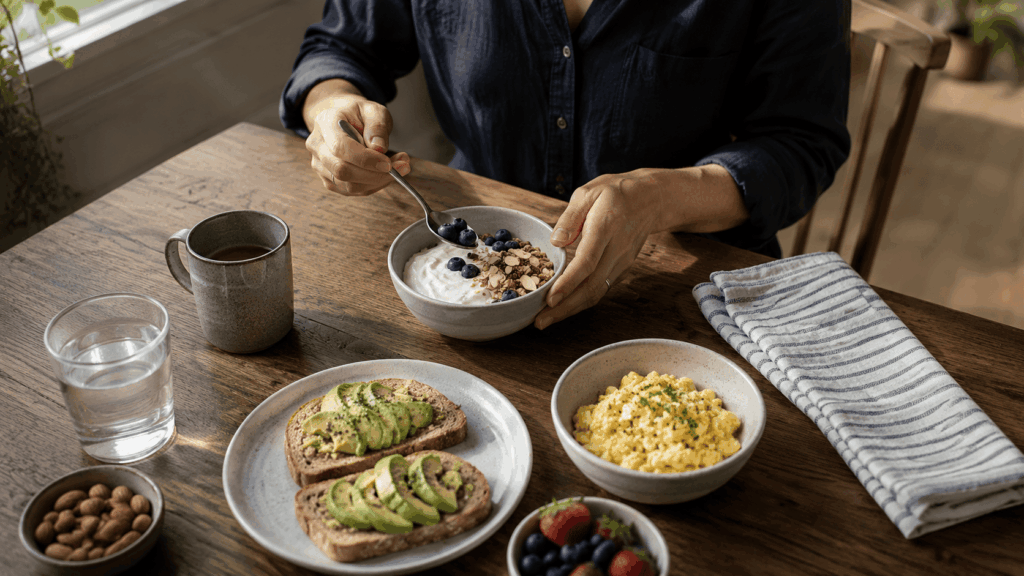
There’s a specific kind of tiredness that doesn’t respond to sleep. You wake up after seven or eight hours and still feel like your thoughts are wrapped in fog. Your energy is inconsistent — fine in the morning, gone by noon, vaguely restless by evening. Your mood dips for no clear reason. And no amount of coffee quite fixes it.
If this pattern feels familiar, it may be worth looking somewhere most people don’t think to look: the gut.
The gut-brain axis — the two-way communication network between your digestive system and your brain — is one of the more fascinating areas of recent biological research. It doesn’t offer simple answers, and the science is still developing. But what it does suggest is that the state of your gut may influence more than digestion. It may shape how you feel, how clearly you think, and how consistently you sustain energy across the day.
This article won’t tell you that fixing your gut will fix your life. But it will walk you through what the research currently suggests, what daily habits may genuinely support this connection, and how to think about all of this in a way that’s realistic and grounded.
Here’s the short version: The gut and brain are in constant communication through the vagus nerve, the enteric nervous system, and gut-produced signaling molecules — including compounds that influence mood and energy regulation. Daily habits like consistent sleep, varied whole-food eating, regular movement, and stress management may support this axis. These habits don’t promise specific results, but they address real inputs into a system that likely matters more than most people realize.
What the Gut-Brain Connection Actually Means
The term “gut-brain axis” refers to the bidirectional signaling network linking your gastrointestinal tract and your central nervous system. This isn’t a metaphor — it’s a physical and biochemical reality.
The gut has its own nervous system, called the enteric nervous system, which contains more than 100 million nerve cells. It communicates with the brain primarily through the vagus nerve, which runs from the brainstem down through the chest and abdomen. Importantly, most of the vagus nerve’s fibers — roughly 80 percent — carry information from the organs, including the gut, up to the brain, not the other way around. The brain sends instructions downward, but the gut is constantly reporting back.
What is it reporting? Among other things: the state of the gut lining, the presence of certain bacterial metabolites, the production of neurotransmitter precursors, and signals related to inflammation and immune activation. The gut also holds much of the body’s serotonin — estimates often cited put it at around 90 percent — where it plays a role in regulating gut motility, though its relationship to mood is more complex than the common shorthand implies.
The microbiome — the community of bacteria, fungi, and other microorganisms that live in the gut — appears to play an active role in this signaling. Different bacterial species produce different metabolites, some of which cross into circulation and may influence brain function. Research in this area is active and not yet fully understood, but the relationship between gut microbial diversity and mood outcomes has attracted serious scientific attention.
What this means practically: the gut is not just processing food. It’s participating in conversations your body is having about stress, energy, and mental state. The habits that support gut health may, through this axis, have downstream effects on how you feel beyond digestion alone.
Why Your Gut Signals May Shape How You Feel During the Day
One of the more useful ways to think about the gut-brain axis is through the lens of inflammation and microbial balance — two factors that appear repeatedly in the research.
When the gut lining is disrupted, certain bacterial products can move more readily into circulation, contributing to a low-grade inflammatory state. Chronic, low-level inflammation has been associated in research with fatigue, cognitive difficulty, and mood changes — symptoms that are often vague and hard to explain, but very real to the person experiencing them. This is not to say that gut disruption causes these symptoms directly or definitively, but it is one mechanism that researchers are exploring.
The microbiome also produces short-chain fatty acids (SCFAs) — particularly butyrate, propionate, and acetate — as byproducts of fermenting dietary fiber. Butyrate, in particular, has attracted research interest for its role in maintaining the gut lining and its potential anti-inflammatory effects. Some research suggests it may also influence brain-derived neurotrophic factor (BDNF), a protein involved in neuronal health, though these connections in humans are still being studied.
Then there’s the role of the gut in producing precursors to neurotransmitters. Tryptophan, an amino acid found in food, is converted in part to serotonin in the gut, and also serves as a precursor to other compounds including kynurenine, whose metabolites have been studied in relation to mood. How much of this gut-based production influences brain function — versus being used locally in the gut — remains an active question in research.
What this means for daily life is not that you can “hack” your gut into perfect mental health. It means that the gut is a participant in your overall physiological state, and that daily choices affecting gut health may have broader relevance than is commonly understood.
How This Shows Up in Real Life
The gut-brain axis doesn’t announce itself clearly. Its effects tend to be diffuse and hard to isolate, which is part of why they’re often missed or attributed to other causes.
Some patterns that may be relevant — and are worth noticing without over-interpreting:
The post-meal fog. A heavy, low-fiber meal that’s quickly digested often produces a predictable energy dip within an hour or two. Some of this is blood sugar regulation. Some may involve gut signaling. Either way, what and how you eat in the morning has downstream effects on how you feel mentally by midday — and many people notice this more clearly once they start paying attention.
The stress-digestion feedback loop. Most people have noticed that stress affects digestion — appetite changes, gut discomfort, altered motility. This is the axis in action. What’s less often recognized is that the loop runs in both directions: gut disruption may amplify stress signals, and chronic stress may affect gut microbial composition over time. Research in mice has demonstrated this bidirectional effect; human evidence is still developing.
The connection between sleep and gut rhythms. The gut microbiome has its own circadian patterns. Disrupted sleep — especially chronic sleep irregularity — has been associated in research with changes in gut microbial composition. This may be one of the many mechanisms linking sleep quality to mood and energy, beyond the more obvious routes of cortisol and neural recovery.
The fiber-energy connection. Populations that eat more dietary fiber — particularly from diverse plant sources — tend to have greater gut microbial diversity in observational research. Microbial diversity is generally associated with better gut health outcomes, though the causality is complex. The practical implication: a diet that consistently lacks fiber may, over time, affect the microbial environment in ways that matter beyond digestion.
None of these patterns are certainties. They are observations worth taking seriously — signals that the gut-brain relationship is real and, at least partially, responsive to daily behavior.
What May Be Disrupting the Connection
Before focusing on what helps, it’s worth naming what tends to disrupt gut-brain communication — because many of these are common features of modern daily life.
Chronically high stress. Sustained stress alters gut motility, increases intestinal permeability in some research models, and may affect microbial composition. The vagus nerve, which is central to the gut-brain axis, is also involved in the stress response. Chronic stress effectively keeps this two-way highway under heavy load, in ways that may affect both ends of the line.
Irregular sleep. As mentioned above, sleep irregularity has been associated with microbiome changes. Shift workers and people with inconsistent sleep schedules often report digestive and mood effects that may be partially explained through this mechanism.
Low dietary diversity. The gut microbiome thrives on variety. A narrow diet — especially one low in plant-based fiber — tends to reduce microbial diversity over time. Ultra-processed foods, which dominate many people’s diets, generally provide little prebiotic substrate for gut bacteria while introducing emulsifiers and additives whose long-term microbial effects are still being studied.
Frequent or prolonged antibiotic use. Antibiotics, when medically necessary, are life-saving. They also significantly alter the gut microbiome, sometimes for extended periods. This isn’t a reason to avoid antibiotics when needed — but it’s context for understanding why a course of antibiotics is sometimes followed by changes in digestion, mood, or energy.
Sedentary behavior. Regular movement is associated with greater gut microbial diversity in observational research. The mechanism is not fully clear, but it may involve gut motility, circulation, and systemic effects of exercise on inflammation.
Understanding what disrupts the system makes the habit-based approach more meaningful. These aren’t arbitrary wellness recommendations — they’re inputs into a biological system that responds to them.
Daily Habits That May Support the Gut-Brain Axis
These are not cures. They are daily practices with a reasonable evidence base for supporting gut health and, through it, some of the downstream effects that connect to mood, energy, and cognitive clarity.
Eat more fiber from diverse sources. The research on dietary fiber and gut microbiome diversity is among the more consistent in this field. Data from the American Gut Project, published in mSystems in 2018, linked eating a wider variety of plants — more than 30 types a week, compared with 10 or fewer — with greater gut microbial diversity. Aiming for 30 or more different plant foods per week, including vegetables, fruits, legumes, nuts, seeds, and whole grains, is a concrete target that some researchers and clinicians now recommend. This doesn’t require perfection. Adding one new plant food per week, or eating a wider variety within a meal, moves the needle.
Include fermented foods regularly. A small randomized study from Stanford (36 healthy adults, published in Cell in 2021) found that a diet high in fermented foods — including yogurt, kefir, kimchi, sauerkraut, and kombucha — increased microbiome diversity and lowered several markers of inflammation, while a high-fiber diet did not change microbial diversity over the same period. This is not a definitive verdict on fermented foods, but it’s one of the more rigorous human trials in this space. Including a serving or two of fermented food daily is a practical, low-effort habit with plausible benefit.
Protect your sleep schedule. Sleep consistency — going to bed and waking at roughly the same time each day — supports circadian rhythm across multiple systems, including gut function. This doesn’t mean perfect sleep every night. It means that regularity may matter as much as duration. A stable sleep window helps the gut microbiome maintain its own circadian patterns.
Move your body daily — especially walking. Regular moderate movement is associated with improved gut motility and greater microbial diversity. Researchers are also studying whether regular aerobic activity influences vagal activity, which is relevant to gut-brain communication, though that link is less established. A 20-to-30-minute walk, ideally after a meal, is a habit with multiple overlapping benefits.
Manage stress with concrete practices. This is the vaguest-sounding but perhaps most important category. Sustained stress is a significant disruptor of gut function and the gut-brain axis. Concrete practices — not generic wellness advice — that have some evidence behind them include: slow, diaphragmatic breathing (which is thought to engage the vagus nerve), regular time outdoors, limiting reactive news consumption in the morning, and having a consistent wind-down routine before sleep. None of these are magic. Together, they reduce the chronic stress load that affects gut function.
Limit ultra-processed foods — not as a punishment, but as a priority. Ultra-processed foods are associated in large observational studies with poorer health outcomes, and researchers are still studying how they affect gut bacteria. They are not a moral failing. But replacing some ultra-processed choices with whole-food alternatives — even gradually — may have cumulative effects on the gut environment over months and years.
Consider prebiotic foods as a specific tool. Prebiotic foods — those that feed beneficial gut bacteria — include garlic, onion, leeks, asparagus, Jerusalem artichokes, and slightly green bananas. Including them regularly provides fermentable substrate for the gut microbiome. They are distinct from probiotic foods (which contain live bacteria) and both have their place in a gut-supporting diet.
How to Think About Supplements in This Context
The gut-brain axis has attracted significant commercial interest, and the supplement market has responded accordingly. Probiotics, prebiotics, L-glutamine for gut lining, butyrate supplements — these are all available, and some have preliminary research behind them.
The honest summary: food-based approaches have a stronger evidence base than most supplements in this area. The microbiome is a complex ecosystem, and the idea that adding one bacterial strain via a supplement will meaningfully shift gut-brain communication is an oversimplification of what the research currently supports.
That said, some people explore probiotics — particularly multi-strain products containing Lactobacillus and Bifidobacterium species — as a complement to dietary changes. There is some evidence that certain probiotic strains may support mood-adjacent outcomes, though the research is still early and effect sizes in human trials are modest. These are sometimes called “psychobiotics” in the research literature, a term that reflects the hypothesis more than a confirmed mechanism.
If you’re interested in supplements in this space, they work best as additions to — not replacements for — the dietary and lifestyle habits described above. And, as with any supplement, individual responses vary. If you have a specific gut condition, work with a clinician before using supplements therapeutically.
Where to Go From Here
The gut-brain axis is a useful lens for understanding why so many people experience vague, hard-to-explain drops in energy, mood, and mental clarity. It doesn’t explain everything, and the science continues to develop. But it does reframe gut health as something that extends well beyond digestion — into how you feel, how you think, and how consistently you show up across the day.
The habits described here are not a protocol. They’re a direction. Start with the one that feels most accessible — maybe it’s adding a new vegetable this week, or eating yogurt with breakfast, or committing to a slightly more consistent sleep window. Small changes in direction, compounded across months, tend to matter more than occasional intense effort.
If you’re interested in the morning side of this picture — specifically how what you do in the first hour of the day shapes energy patterns — the article on building a sustainable morning energy routine offers a complementary perspective. And if afternoon slumps are a consistent problem for you, a separate guide to the post-lunch slump will look more specifically at that pattern.
Frequently Asked Questions
What is the gut-brain axis, and why does it matter for energy?
The gut-brain axis is the two-way communication network between your gastrointestinal system and your brain, involving the vagus nerve, the enteric nervous system, and gut-produced signaling molecules. It matters for energy because the gut actively reports to the brain about its state — including inflammatory signals and neurotransmitter precursors — which may influence mood, mental clarity, and how energized you feel throughout the day.
Can improving gut health actually affect my mood?
Some research suggests a connection between gut microbial composition and mood-related outcomes, but this relationship is complex and not fully understood. The gut produces compounds that may influence brain function, and gut-targeted habits — like eating more fiber and fermented foods — have been associated with positive changes in gut microbial diversity and inflammatory markers in some studies. These habits may support mood as a downstream effect, though they are not a treatment for mood disorders.
What foods are best for supporting the gut-brain axis?
A diverse range of plant foods (for fiber and prebiotic content), fermented foods (yogurt, kefir, kimchi, sauerkraut, kombucha), and whole foods generally support gut microbial diversity. No single food is essential. Consistency and variety matter more than any specific item.
How long does it take to see a difference from gut-focused habits?
Gut microbial composition can begin to shift within days of dietary changes, though meaningful changes in how you feel may take weeks to months to notice. This is a long-game practice, not a quick fix. Consistency matters more than intensity.
When should I talk to a doctor about gut health?
If you experience persistent digestive symptoms — ongoing bloating, pain, changes in stool, unexplained weight loss — or if mood changes are significant and affecting daily life, speak with a healthcare professional before trying supplements or self-directed interventions. Gut symptoms can reflect conditions that need proper diagnosis, not just lifestyle adjustment.
Sources
- The Brain-Gut Connection — Johns Hopkins Medicine
- Breit S, et al. Vagus Nerve as Modulator of the Brain-Gut Axis in Psychiatric and Inflammatory Disorders — Frontiers in Psychiatry, 2018 (PubMed)
- Yano JM, et al. Indigenous bacteria from the gut microbiota regulate host serotonin biosynthesis — Cell, 2015 (PubMed)
- McDonald D, et al. American Gut: an Open Platform for Citizen Science Microbiome Research — mSystems, 2018 (PubMed)
- Wastyk HC, et al. Gut-microbiota-targeted diets modulate human immune status — Cell, 2021 (PubMed)
- David LA, et al. Diet rapidly and reproducibly alters the human gut microbiome — Nature, 2014 (PubMed)
This article is for general information and is not medical advice. Talk with a qualified healthcare professional about persistent digestive symptoms or significant mood changes, and before starting a supplement, especially if you are pregnant, nursing, managing a health condition or taking medication.

Mary writes about energy, longevity and everyday wellness habits — with an honest eye on what the evidence actually says. Her approach is simple: habits first, supplements second, and no promises she can't back up.