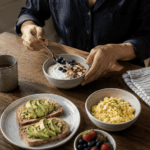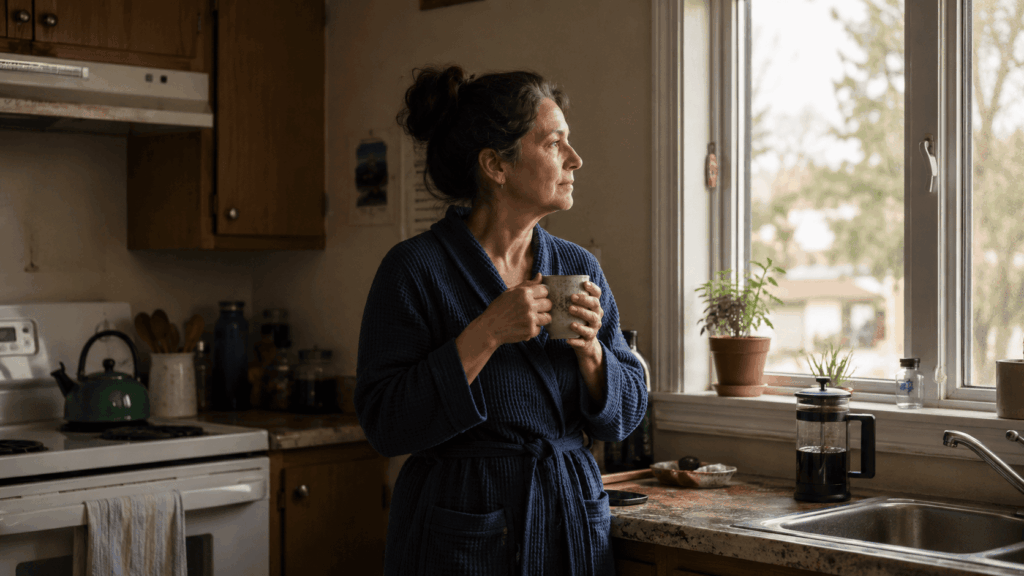
Most people who start paying attention to longevity do it for a quiet reason: they noticed something. Stairs feel different than they did five years ago. Recovery after a bad night’s sleep takes longer than it used to. A parent’s diagnosis lands closer to home than it once did. And somewhere in the search that follows, they run into a version of “longevity” that has very little to do with any of that — cold plunges, twelve-ingredient supplement stacks, biomarker dashboards, and a tone that suggests anyone not tracking their own blood panels at home is somehow falling behind.
That version is loud, expensive, and, for most people’s actual day-to-day lives, largely beside the point. The research on human lifespan — and more importantly on *healthspan*, the years spent not just alive but able to do the things that make life worth living — keeps circling back to a shorter, far less glamorous list. Sleep. Movement. What and how you eat. How you handle stress. Who you spend real time with. None of that fits neatly into a product page. All of it is backed by a genuinely large and consistent body of evidence, including population research like the Blue Zones studies and decades of cohort data from long-running work such as the Harvard Study of Adult Development.
This article is about that shorter list — what the five things that matter most actually look like in an ordinary week, why “boring” is, in this one specific area, closer to a feature than a flaw, and how to start thinking about your own habits without turning your life into a tracking project.
The five things that matter most for everyday longevity are: consistent, adequate sleep; regular movement that doesn’t have to look like a gym routine; an eating pattern built around whole foods and steady protein; active, repeatable stress regulation; and stable social connection. Large population studies link these five factors to measurably longer, more functional lives — more consistently, and with stronger evidence, than almost any individual supplement, device, or biohacking protocol on the market.

What “longevity” actually means when you’re not trying to live to 120
Part of the confusion around longevity comes from how the word gets used online. In a lot of content, “longevity” quietly means “living dramatically longer than anyone currently does” — pushing past 100, reversing biological age on a lab test, optimizing for decades that may or may not arrive. That framing pulls the conversation toward extremes: extreme diets, extreme routines, extreme spending.
For most people, though, the more useful question isn’t “how do I live to 120?” It’s “how do I keep functioning well at 55, 65, 75 — moving without pain, thinking clearly, sleeping properly, staying connected to people who matter?” That’s healthspan, and it’s a different target than raw lifespan. You can add years to a life without adding much living to those years; the research on aging populations shows this gap clearly, with many people living longer than previous generations but spending a larger share of those extra years managing chronic conditions.
Reframing longevity around healthspan changes what “works.” A supplement that nudges one biomarker in a study doesn’t matter much if your sleep is fragmented five nights a week. A wearable that tracks twenty metrics doesn’t change anything if the data just sits there generating mild anxiety. What actually shows up in long-term outcomes is closer to: did you sleep enough, did you move your body, did you eat in a way your body could use, did you manage stress instead of marinating in it, and did you stay connected to other people. Those five threads come up again and again in research on aging populations, and they’re also the threads most people can realistically pull on without overhauling their entire life.
Why most longevity content misses the point
A lot of longevity content is built to be shareable rather than usable. Extreme routines photograph well. A morning that involves six supplements, a sauna, a cold plunge, and a fasting window makes for a compelling video — and also makes anyone watching feel like they’re already behind before they’ve started. That feeling is part of the business model: it keeps people scrolling, comparing, and buying.
The problem isn’t that any of those individual practices are inherently bad. Some have reasonable evidence behind them in specific contexts. The problem is what gets left out of the frame: the person doing all of that is often also sleeping eight hours, eating well, moving daily, and managing a low-stress life — and *that* foundation is most of what’s actually doing the work. Layering extras on top of a shaky foundation rarely produces the results people expect, and it often produces something else instead: a kind of low-grade anxiety about whether you’re “doing enough,” which is its own quiet drain on long-term health.
There’s also a selection problem. The people producing a lot of high-intensity longevity content tend to have more time, more money, and often more flexible schedules than the people consuming it. A protocol that assumes ninety free minutes every morning isn’t really a longevity strategy for someone working two jobs or raising small children — it’s a description of someone else’s life. The five things this article focuses on were chosen partly because they scale down. You can sleep better whether you have a guest room or a studio apartment. You can move your body whether or not you have a gym membership. That’s not a consolation prize; it’s closer to where the actual evidence points.
How this shows up in a normal week
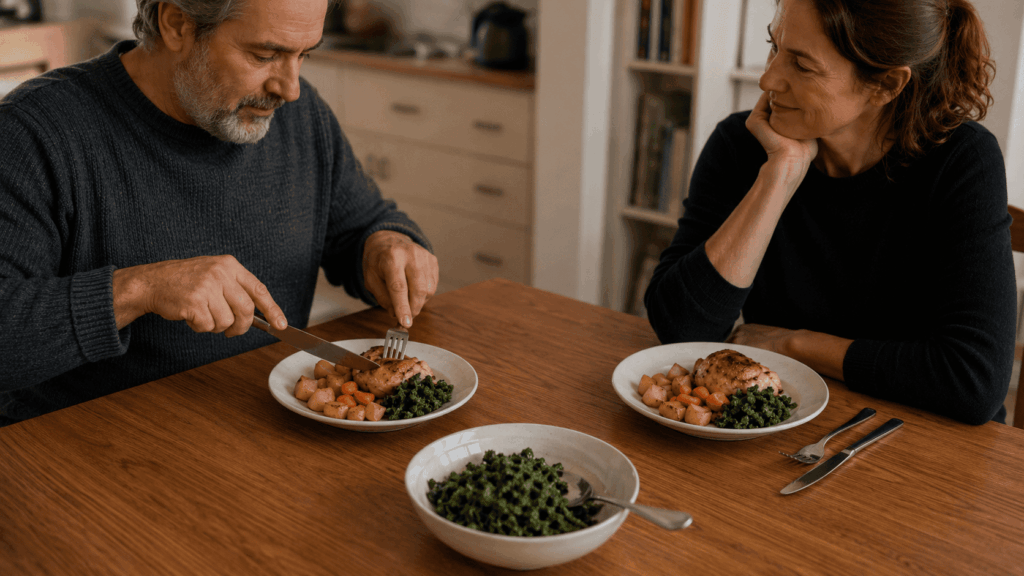
Picture an ordinary week for someone in their forties or fifties who isn’t training for anything, isn’t on a special diet, and isn’t trying to “hack” their biology — just trying to feel functional and stay that way.
Some nights, sleep is solid. Other nights, it’s interrupted by a racing mind at 2 a.m., a restless partner, or simply staying up too late scrolling because it’s the only quiet time in the day. Movement happens in fragments — a walk at lunch, stairs instead of the elevator, chasing a kid or a dog around — rather than as a single dedicated block. Meals are a mix: a rushed breakfast, a decent lunch, and a dinner that depends entirely on how the day went. Stress shows up as a tight jaw, a tense pair of shoulders, or a habit of checking the phone the second there’s a free moment. And social connection often gets squeezed to the edges — a text exchange here, a weekend call there, good intentions to see friends “soon.”
None of that is a failure. It’s what real life looks like for most adults navigating work, family, and everything in between. But it’s also useful to notice that this is exactly the territory where the five core habits live — not as a separate project bolted onto an already full life, but as small adjustments to things that are already happening. The goal isn’t to add a longevity routine on top of your week. It’s to gently reshape the week you already have.
What quietly works against long-term health
Before getting to what helps, it’s worth naming what tends to work against healthspan — not as a list of things to fear, but as a way of noticing patterns that are easy to miss because they feel so normal.
Chronic sleep debt is one of the biggest. Not the occasional rough night, but a pattern of routinely getting six hours when your body needs seven or eight. Research on sleep and long-term health repeatedly associates sustained short sleep with a higher likelihood of cardiovascular issues, metabolic changes, and cognitive decline over time — not because one bad night does damage, but because the debt compounds quietly, year after year.
Long stretches of sitting without movement is another. The body adapts to whatever it repeatedly does, and a day spent almost entirely seated — commute, desk, couch — sends a fairly consistent signal that movement isn’t required. Over years, that can show up as reduced mobility, slower metabolism, and a higher baseline risk for several chronic conditions. Some research suggests that long stretches of sitting carry risk even for people who exercise, although higher overall activity appears to offset much of it.
Highly processed eating patterns matter less as single meals and more as defaults. A diet where ultra-processed foods make up the majority of daily intake is associated, in large nutritional studies, with higher rates of metabolic and cardiovascular issues over time — not because any one ingredient is dangerous, but because the overall pattern tends to crowd out the foods that support steady energy, stable blood sugar, and proper nutrient intake.
Unmanaged chronic stress is probably the most underestimated factor of the five. Stress itself isn’t the enemy — it’s a normal part of being alive. What seems to matter for long-term health is whether stress gets metabolized or whether it accumulates: whether someone has any reliable way to come down from a tense state, or whether tension just keeps stacking, day after day, with no real release valve.
And finally, social isolation — which research increasingly treats as seriously as more familiar risk factors. Research summarized in the U.S. Surgeon General’s 2023 advisory on social connection suggests that the health risks linked to loneliness and isolation are comparable to those of smoking daily, and may exceed those linked to physical inactivity. That’s a striking comparison, and it’s part of why social connection earns a place on this list rather than being treated as a “nice to have.”
The five habits that genuinely move the needle
This is the part that tends to disappoint people looking for something new — and that’s sort of the point. These five habits aren’t exciting. They’re consistent, they’re well-supported, and they’re available to almost anyone, in some form, starting this week.
1. Protecting sleep like it’s part of your job, not a luxury around it
Sleep is when the body repairs tissue, consolidates memory, regulates hormones, and clears metabolic waste from the brain. Adults generally need somewhere between seven and nine hours, though the exact number varies by person. What seems to matter most for long-term health isn’t perfection — it’s consistency: going to bed and waking up at roughly the same times, even on weekends, and protecting the hour before sleep from bright screens and high-stimulation content. A simple, repeatable wind-down — dimming lights, stepping away from screens, doing something low-key — does more for most people’s sleep quality than almost any product marketed for the same purpose.
2. Moving in ways that fit into a real life, not around it
The research on movement and longevity doesn’t actually require a gym membership or a structured training plan. What it consistently shows is that *regular* movement — walking, climbing stairs, gardening, carrying groceries, playing with kids — is strongly associated with lower rates of cardiovascular disease, better metabolic health, and preserved mobility later in life. The threshold for meaningful benefit is lower than most fitness marketing suggests; even modest daily movement, sustained over years, shows up clearly in long-term outcome data. The habit that tends to stick isn’t the most intense one — it’s the one that fits naturally into an existing day.
3. Eating in a way that gives your body steady, usable fuel
This isn’t about a specific diet, a list of forbidden foods, or counting anything. It’s about a general pattern: meals built mostly around whole or minimally processed foods, a steady source of protein, and enough variety to cover a broad range of nutrients. Large nutritional studies consistently associate this kind of pattern — sometimes loosely described as “Mediterranean-style” — with lower rates of chronic disease and longer healthspan, more so than any single “superfood” or supplement. A useful, low-pressure starting point is simply asking, at most meals: is there something here my body can actually use well — some protein, some vegetables, something close to its original form?
4. Having an actual, repeatable way to come down from stress
This is less about eliminating stress — which isn’t realistic for most people — and more about having a reliable way to discharge it before it accumulates. That could be a short walk, slow breathing for a few minutes, time outdoors, a hobby that fully occupies your attention, or simply a consistent wind-down ritual at the end of the day. What seems to matter is that the practice is something you’ll actually do, regularly, not something elaborate that looks good on paper but never quite happens. The nervous system responds to repetition far more than to intensity.

5. Investing in real connection, on purpose
Of the five, this is the one most often treated as optional — and the one with some of the most striking long-term data behind it. The Harvard Study of Adult Development, which has followed participants for over eight decades, has repeatedly pointed to the quality of close relationships as one of the strongest predictors of healthy aging — better predictors of long and happy lives, in the study’s findings, than social class, IQ, or even genes.
That doesn’t mean you need a packed social calendar. It means noticing whether you have a small number of relationships where you can be genuinely known, and treating the maintenance of those relationships as seriously as you’d treat any other long-term investment.
None of these five habits requires special equipment, a particular income level, or a dramatic life overhaul. What they tend to require is attention — noticing where your week already supports them, and where it quietly works against them.
Where supplements fit into this picture
It’s worth being direct about this, because a lot of longevity content puts supplements at the center of the conversation when the evidence consistently puts habits there instead. Supplements are not the foundation of a long, functional life. At best, some may offer modest support around the edges of habits that are already in place — they don’t replace sleep, movement, nutrition, stress regulation, or connection, and they’re not designed to.
That doesn’t mean supplements have no place. For some people, certain nutrients can be harder to get consistently from food alone — depending on diet, age, life stage, or specific circumstances — and a conversation with a healthcare provider about targeted, individual needs can be genuinely useful. What tends not to hold up, though, is the idea of a long list of supplements as a substitute for the basics, or as a shortcut around them. If anything, the research suggests the opposite order: get the five habits reasonably steady first, and treat anything else — including supplements — as a much smaller, secondary layer on top of that foundation, ideally discussed with a professional who knows your individual health picture.
This is also where it’s worth being skeptical of any claim that a single ingredient or stack will meaningfully extend your life. Longevity research is slow, population-based, and rarely produces dramatic single-variable findings — which is part of why habits, studied over decades and across huge populations, have so much more behind them than most individual products ever will.
Bringing it together
If there’s one thing worth taking from all of this, it’s that longevity, for most people, isn’t a project you start — it’s a direction you nudge your existing life toward. The five things that the evidence keeps pointing to — sleep, movement, nutrition, stress regulation, and connection — aren’t separate from your daily life. They’re already woven through it, in ways that are easy to either strengthen or quietly erode without noticing.
You don’t need to overhaul everything at once, and you don’t need to add a long list of new practices on top of an already full week. A more realistic starting point is simply picking one of the five — the one that feels most off-balance right now — and giving it a little more attention for a few weeks. Mornings tend to be one of the easiest places to start, because small shifts there tend to ripple through the rest of the day — which is exactly the territory the next article in this series explores, looking at what a realistic morning routine for stable energy can actually look like without adding pressure to an already busy start to the day.
Frequently Asked Questions
Is it too late to start building these habits if I’m already in my 50s or 60s?
No — research on aging suggests that improvements in sleep, movement, nutrition, stress management, and social connection are associated with better health outcomes even when they begin later in life. The habits in this article aren’t only protective when started early; studies on adults who adopt them later in life still show meaningful associations with improved function and reduced risk over time.
Do I need to do all five things perfectly to see any benefit?
No, and trying to do that often backfires by making the whole approach feel overwhelming. Population research tends to show a “more is generally better, and consistency matters more than perfection” pattern — small, steady improvements in even one or two areas are associated with better outcomes than an all-or-nothing approach that’s hard to sustain.
How is “healthspan” different from “lifespan,” and why does it matter more here?
Lifespan is simply how long you live. Healthspan is how many of those years you spend able to function well — moving, thinking clearly, staying engaged with the people and activities that matter to you. Most people, when asked directly, say they care more about the second than the first, which is part of why this article (and the broader research) focuses there.
Are longevity supplements worth trying alongside these habits?
Some people explore individual supplements as a smaller, secondary layer on top of an already steady foundation of habits — but they’re not a substitute for that foundation, and their effects vary significantly between individuals. If you’re considering adding something to your routine, it’s worth discussing your specific situation with a healthcare provider who knows your health history, rather than choosing based on general marketing claims.
Where should someone start if all five areas feel a little shaky right now?
Sleep is often the most practical starting point, because it tends to influence the other four — when sleep is consistently poor, movement feels harder, eating patterns often shift toward convenience, stress feels more intense, and energy for connecting with others drops. Stabilizing sleep first, even modestly, often makes the other habits noticeably easier to build.
Further reading and references
- Over nearly 80 years, Harvard study has been showing how to live a healthy and happy life — The Harvard Gazette, 2017
- Harvard Study of Adult Development — official study website
- Sleep and Older Adults — National Institute on Aging (NIH)
- What Do We Know About Healthy Aging? — National Institute on Aging (NIH)
- Diet Review: Mediterranean Diet — The Nutrition Source, Harvard T.H. Chan School of Public Health
- Our Epidemic of Loneliness and Isolation — U.S. Surgeon General’s Advisory, 2023 (PDF)
This article is for general information and is not medical advice. Talk with a qualified healthcare professional before making significant changes to your sleep, activity or eating patterns, or before starting a supplement, especially if you are pregnant, nursing, managing a health condition or taking medication.

Mary writes about energy, longevity and everyday wellness habits — with an honest eye on what the evidence actually says. Her approach is simple: habits first, supplements second, and no promises she can't back up.